
Construction Debris Removal in Metro Detroit: What Homeowners and Contractors Need to Know

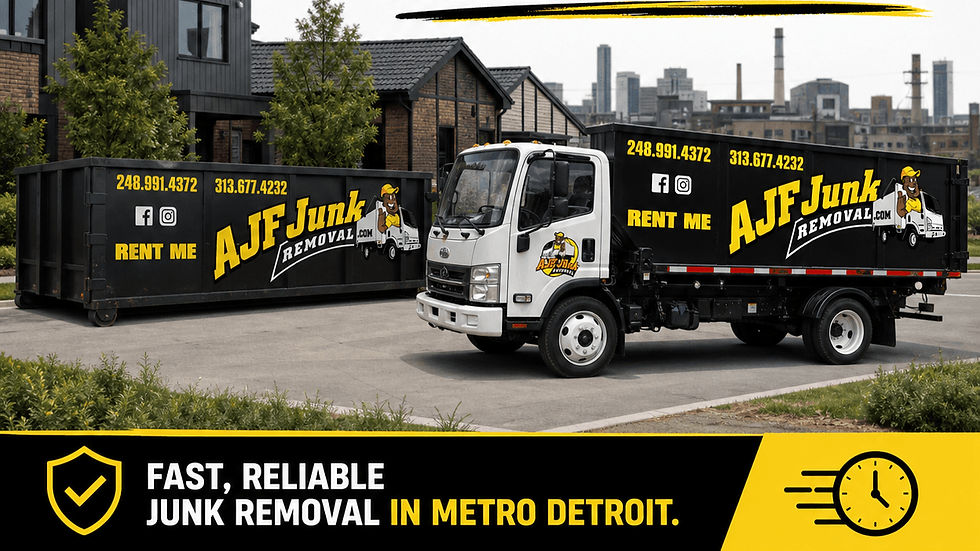
Whether you just finished a kitchen remodel in Royal Oak, tore down a garage in Dearborn, or wrapped up a commercial renovation in Southfield, one question always follows the final nail: what do I do with all this construction debris? It piles up fast — drywall scraps, lumber, roofing shingles, old concrete, flooring, and a dozen other materials that won't fit in a recycling bin and definitely don't belong at the curb.
This guide walks you through your options for construction debris removal in Metro Detroit — how much it costs, what the rules are in Michigan, and how to choose between renting a dumpster and hiring a junk removal crew. No guesswork, no jargon. Just practical answers.
Quick Answer: Construction debris removal in Metro Detroit typically costs $200–$600 for junk removal service or $300–$700+ for a dumpster rental, depending on volume and material type. Most standard C&D materials — lumber, drywall, roofing, concrete — can be legally disposed of at licensed Michigan facilities. Hazardous materials like asbestos and lead paint require separate, licensed handling. Your two main options are hiring a full-service junk removal company (crew loads and hauls everything) or renting a roll-off dumpster (you load it yourself over several days).
What Counts as Construction Debris?
Construction and demolition (C&D) waste is the mix of solid materials left over from building, remodeling, or tearing down structures. Under Michigan's environmental rules — governed by EGLE (the Department of Environment, Great Lakes, and Energy) under Part 115 of the Natural Resources and Environmental Protection Act — C&D waste is broadly defined as non-hazardous building materials, packaging, and rubble.
Common construction debris we handle includes:
Lumber and wood framing scraps
Drywall and plaster
Roofing shingles and underlayment
Concrete, brick, block, and masonry rubble
Metal framing, pipes, conduit, and wire
Flooring — tile, hardwood, laminate, carpet
Insulation — fiberglass batts, rigid foam (but NOT vermiculite or anything suspected to contain asbestos)
Windows, doors, and cabinetry
Packaging materials — pallets, cardboard, plastic wrap
If your project generated a combination of the above, you're dealing with standard mixed C&D waste — and there are clear, legal options for getting rid of it.
What Can't Go in a Standard Dumpster or Junk Removal Truck?
This is one of the most important questions to get right. Michigan state rules and local ordinances are strict about hazardous materials — and the consequences of illegal disposal can be significant. The following items are excluded from standard C&D disposal and require separate, licensed handling:
Asbestos-containing materials (ACM): Found in older homes in flooring tiles, pipe insulation, ceiling tiles, and textured drywall compound. If your structure was built before 1980, a state-licensed asbestos inspector must assess it before any demolition work begins. If regulated quantities are found, a licensed abatement contractor is required for removal.
Lead-painted demolition material: As of January 2025, lead-painted debris from demolition projects must be tracked through the federal E-Manifest digital tracking system. Your hauler needs to be prepared for this.
Wet paint, solvents, pesticides, and flammables: These are classified as hazardous waste and cannot go in any standard C&D container.
Contaminated soil: Excavation soil suspected of contamination falls under the E-Manifest system as of January 2025.
Tires and automotive parts: Not accepted at most C&D disposal facilities.
Liquids of any kind: Prohibited at licensed Type III C&D landfills in Michigan.
When in doubt about any material, ask your junk removal or dumpster rental provider before you load it. A reputable company will tell you upfront what they can and can't take.
Michigan Disposal Rules for C&D Waste
Michigan's C&D waste disposal framework is managed by EGLE under Part 115 of the Natural Resources and Environmental Protection Act. Here's what that means practically:
Licensed Facilities Are Required
All C&D waste in Michigan must go to an EGLE-licensed Type III C&D landfill or transfer station — not a municipal trash landfill. Haulers operating in Metro Detroit need to be licensed waste transporters. When you hire a junk removal or dumpster rental company, ask if they're licensed and where they're taking your debris. A legitimate company should be able to answer both questions clearly.
Recycling Is an Option for Clean Materials
Clean concrete, brick, and metal scrap can often be diverted to recycling facilities. If you have a large quantity of a single clean material — like a poured concrete driveway or scrap steel — ask your hauler whether they can divert it. It's better for the environment and sometimes reduces disposal fees.
Asbestos: Know Before You Demo
If your home or building was constructed before 1980, state rules require that a licensed asbestos inspector evaluate the entire structure before demolition begins. This isn't optional — it's a prerequisite for a demolition permit in Detroit, Livonia, Warren, Troy, Dearborn, and most Metro Detroit cities. If asbestos-containing material is found, a licensed abatement contractor must remove it before any junk removal or demolition crew touches the structure. For more information, visit the Michigan EGLE website at michigan.gov/egle.
Dumpster Rental vs. Junk Removal: Which Is Right for Your Project?
This is the question we hear most often from contractors and homeowners in Metro Detroit. The honest answer is: it depends on your project type, timeline, and how much physical work you want to do. Here's a side-by-side breakdown:
Dumpster Rental vs. Junk Removal for Construction Debris
Best For — Dumpster Rental: Projects where debris accumulates over several days; you do the loading at your own pace.
Best For — Junk Removal: Post-project cleanouts where everything is done; or when you want a crew to load and haul without any physical work on your end.
Cost Range — Dumpster Rental: $300–$700+ (plus permit fees if placed on public street)
Cost Range — Junk Removal: $200–$600+ depending on volume and material weight
Speed — Dumpster Rental: Delivered same or next day; pickup 1–7 days after you finish loading
Speed — Junk Removal: Often same-day or next-day; crew arrives and removes everything in one visit
Permit Required — Dumpster Rental: Only if placed on a public street or sidewalk
Permit Required — Junk Removal: Generally no permit needed — crew loads directly onto the truck
Space Needed — Dumpster Rental: Requires driveway, parking area, or street space for a 10–40 yard container
Space Needed — Junk Removal: Only needs truck access — no container left onsite
Choose Dumpster Rental If...
You're doing a multi-day or multi-week renovation and debris will accumulate gradually
You have a driveway or safe placement area for the container
You want to control your own loading pace and schedule
Your project generates primarily light construction materials — wood, drywall, roofing
Choose Junk Removal If...
Your project is finished and you need a quick, one-time cleanout
You don't have space for a container — tight lot, HOA restrictions, narrow driveway
You have heavy materials like concrete or brick (pricing is weight-sensitive)
You want a crew to handle all the loading — no physical labor on your end
You have a mix of debris types — some C&D waste, some old furniture or appliances
How Much Does Construction Debris Removal Cost in Metro Detroit?
Cost is almost always the first question, and it's a fair one. Construction debris removal pricing in Metro Detroit varies based on several factors.
Volume and Weight
Most junk removal companies price by how much space your debris takes up in the truck. Dumpster rental pricing is usually flat-rate for a given container size, with overage fees if you exceed the weight limit. Construction materials — especially concrete and brick — are dense and heavy, which can push costs up quickly. A full truckload or a 17-yard dumpster filled with roofing shingles or concrete rubble will cost more than one filled with lightweight drywall.
Material Type
Mixed C&D waste goes to a licensed Type III facility. Some materials — like clean concrete or scrap metal — may be directed to recycling, which can lower your disposal fee. Specialty items like mattresses, appliances, or electronics may carry additional handling fees even when mixed in with a construction load.
General Cost Ranges for Metro Detroit
Small junk removal load (1/4 truck): $150–$300
Half-truck load (medium renovation cleanout): $250–$450
Full truck load (large gut-job, demo, or post-construction cleanout): $450–$700+
10-yard dumpster rental (small re-roof, single-car garage cleanout): $300–$400
17-yard dumpster rental (medium renovation, full re-roof, deck removal): $400–$600
30–40-yard dumpster rental (full demolition, large commercial project): $500–$900+
Note: These are general market ranges for Metro Detroit. Prices vary by company, project specifics, and current disposal facility rates. The best way to get an accurate number is to request a free quote — most reputable companies offer them with no pressure and no commitment.
Do You Need a Dumpster Permit in Detroit, Livonia, or Other Metro Area Cities?
Permit rules for roll-off dumpsters are local — not statewide. Michigan doesn't have a blanket state permit requirement for dumpsters on private property, but cities across Metro Detroit have their own ordinances.
Private property (your driveway or yard): No permit required in most cases. This is the simplest placement option.
Public street or sidewalk: A permit is typically required. Detroit requires compliance with its street-use permit rules and Environmental Ordinance 204.8. Livonia, Warren, Troy, and Dearborn have similar requirements for containers blocking sidewalks or traffic lanes.
Large commercial or demolition projects: Cities like Troy and Dearborn may require a waste management plan as part of the demolition permitting process.
The safest approach: before placing any container on a public street, call your city's Department of Public Works or Building Safety division to confirm requirements. Fines for unpermitted street placement are common and avoidable. A good dumpster rental company will handle permit applications for you — ask if that's included in their service.
Tips for a Smoother Construction Cleanout
Whether you're a homeowner wrapping up a bathroom gut job or a contractor finishing a commercial fit-out, these tips will make debris removal faster and cheaper:
Separate heavy from light materials: If you have a significant amount of concrete, brick, or stone, ask about a separate quote for heavy materials — weight-based pricing can be more cost-effective.
Pull hazardous materials out before scheduling: If you suspect asbestos, lead paint, or chemical-containing materials, get an assessment first. No reputable junk removal company will haul prohibited materials.
Don't overfill the dumpster: Roll-off containers must be loaded level with the top of the container — nothing can stick up above the sides during transport. Break materials down when possible.
Book early during busy season: Summer is peak season for junk removal and dumpster rentals across Metro Detroit. If your project wraps up in June, July, or August, book your removal a few days ahead when possible.
Ask what's included in the quote: A clear quote should include disposal fees, fuel, and labor. Ask whether weight-based overage charges apply and what the threshold is.
Consider same-day service for tight timelines: A junk removal crew that can arrive and load out your site in a single visit is often faster than waiting for a dumpster delivery, filling it, and scheduling a pickup.
Key Takeaways
Standard construction debris — wood, drywall, roofing, concrete, metal — can be legally removed and disposed of at licensed Michigan C&D facilities.
Hazardous materials — asbestos, lead paint, solvents, contaminated soil — require separate licensed handling and cannot go in standard dumpsters or junk removal trucks.
Dumpster rentals work best when debris accumulates over time; junk removal is better for finished projects and tight spaces.
Permit requirements for dumpsters are local — always check with your city before placing a container on a public street.
Getting a free quote before committing helps you compare the true all-in cost between your options.
AJF Junk Removal serves homeowners, contractors, and commercial property managers throughout Metro Detroit — from Detroit and Dearborn to Livonia, Southfield, and Warren. If you have construction debris that needs to go, our team can walk you through your options and give you a straight answer on pricing. Contact us for a free, no-pressure quote.
Frequently Asked Questions
Can junk removal companies take construction debris in Metro Detroit?
Yes — most full-service junk removal companies in Metro Detroit accept standard construction and demolition debris, including lumber, drywall, roofing materials, flooring, concrete, and mixed renovation waste. The key exception is hazardous materials like asbestos, lead paint, and chemical-containing items, which require separate licensed disposal. Always confirm with your provider what they accept before scheduling.
What size dumpster do I need for a construction project?
For most residential renovation projects — a bathroom gut, kitchen remodel, or flooring replacement — a 10- or 15-yard dumpster is usually sufficient. A full re-roof or deck teardown typically needs a 20-yard container. Large demolition projects or full-home gut jobs may require a 30- or 40-yard roll-off. When in doubt, go slightly larger — it's usually cheaper than ordering a second container.
Is concrete considered construction debris?
Yes, concrete is standard C&D waste and can be legally hauled and disposed of in Michigan. However, it's very heavy — a small pile of concrete chunks can quickly exceed weight limits on both trucks and dumpster rental agreements. If you have a significant amount, ask for a specific quote. Clean concrete may also qualify for recycling, which can reduce disposal costs.
Do I need a permit to rent a dumpster in Detroit?
Only if the container will be placed on a public street or sidewalk. Dumpsters on private property — your driveway or yard — typically don't require a permit in Detroit or surrounding Metro area cities. For street placement, Detroit requires a street-use permit. Other cities like Livonia, Warren, and Troy have similar ordinances. Check with your city's Department of Public Works before scheduling street placement.
Can I throw away drywall in a dumpster in Michigan?
Standard drywall (gypsum board) is non-hazardous C&D waste and is accepted at licensed Type III C&D facilities in Michigan. One exception: older drywall joint compound (used before the late 1970s) may contain asbestos. If you're demoing walls in a pre-1980 home, it's worth having the material tested before hauling. Drywall from newer construction can go in the dumpster or junk removal truck without issue.
How long can I keep a dumpster for a construction project?
Most dumpster rental agreements in Metro Detroit include a rental period of 3–7 days, with options to extend for an additional daily or weekly fee. For longer renovation projects, some companies offer extended rental periods of 2–4 weeks. Always confirm the rental period and extension fees upfront — unexpected overage charges can add up if your project runs long.
What happens to construction debris after it's hauled away?
Standard mixed C&D debris goes to a licensed Type III C&D landfill in Michigan — separate from municipal solid waste landfills. Clean materials like concrete, metal, and sometimes wood may be diverted to recycling. A licensed hauler should be able to tell you where your debris is going. If a company can't or won't tell you, that's a red flag.
Can I mix construction debris with household junk in the same load?
Often yes — many junk removal companies will take a mixed load that includes both construction debris and household items like old furniture or appliances. Some dumpster rental providers restrict containers to C&D waste only. Check with your provider before mixing material types. If your project involves both a renovation cleanout and general junk, a full-service junk removal crew is usually the most flexible option.
Does asbestos testing have to happen before I schedule junk removal?
If you're demoing any structure built before 1980 in Michigan, yes — state rules require a licensed asbestos inspector to assess the entire structure before demolition begins. This testing is also required before a demolition permit is issued in most Metro Detroit cities. If asbestos is found, a licensed abatement contractor must remove it before any junk removal or demolition crew can proceed.
How do I get rid of roofing shingles in Michigan?
Old asphalt shingles are C&D waste and can go in a licensed dumpster rental or be hauled by a junk removal company with C&D disposal capability. A re-roof on a standard home typically generates enough shingle waste to fill a 10–15 yard dumpster. Some asphalt shingles can be recycled into road paving material — ask your provider whether they partner with a shingle recycling facility.


Comments